
This is a sequel build log to the earlier WordPet archive on aogl.cn. Screenshots still live under original/wordpet-app/. WordPet is an app I developed myself (© kolang). App link: https://wordpet.aogl.cn/. The first note covered UI surfaces—login path, textbooks, flashcards, dialogue, library. This page goes deeper on three shipping questions parents and students actually ask after the novelty fades: what is the daily study rhythm, how do pets evolve, and how tightly do Shanghai textbook units stay synced to check-in?
og-share.png — brand / Open Graph source reused for this sequel.Why a sequel exists
Shipping a vocabulary pet app is easy to demo and hard to keep honest. After launch on wordpet.aogl.cn, the failure modes I watched were not “missing a prettier egg skin.” They were rhythm failures: students binge fifty cards once, skip three days, then feel the pet is stuck; parents pin the wrong book and wonder why classroom unit words never appear; kids chase library summons while the main-book progress bar barely moves. This sequel documents the rules I treat as product law—not marketing flavor text.
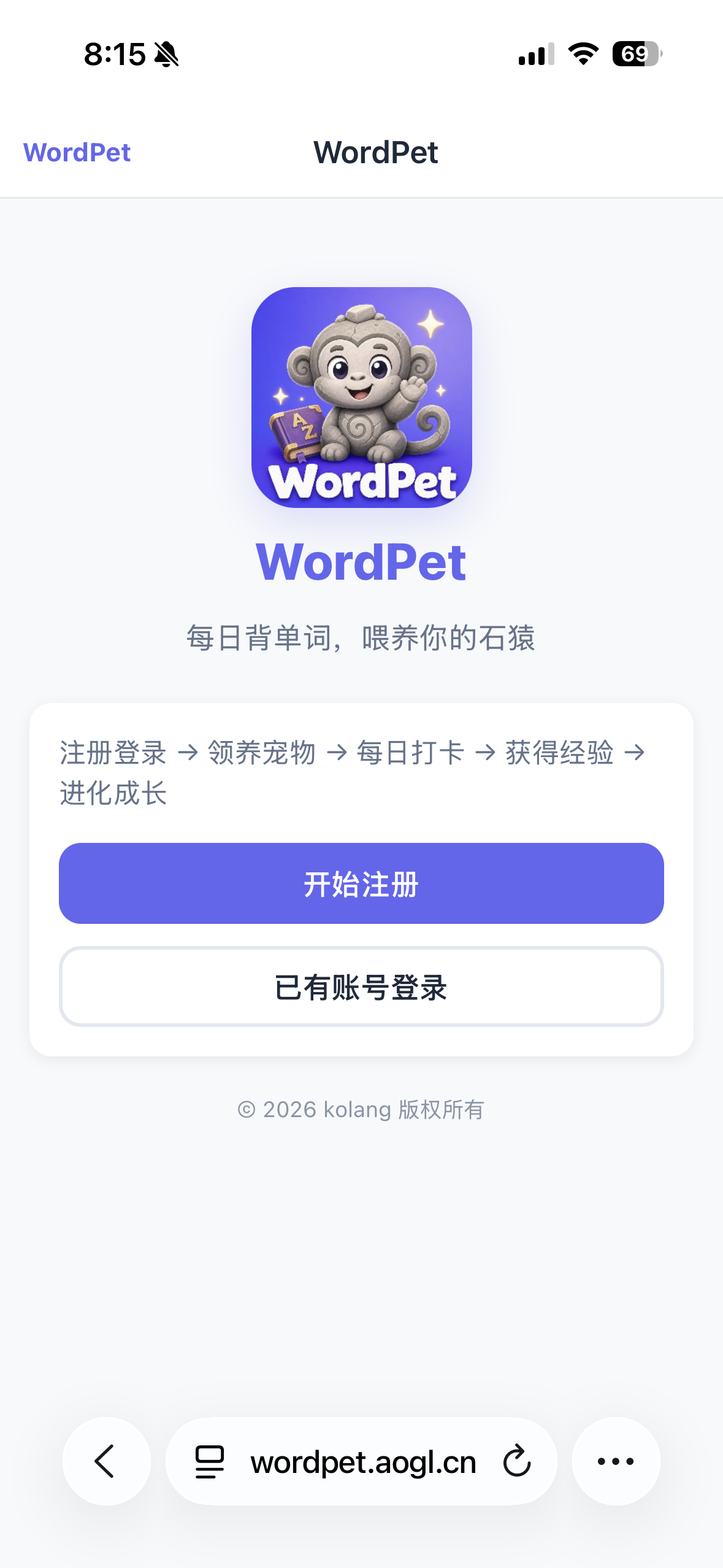
login.png — the five-step habit spine still stands.Study rhythm: small daily load beats heroic cram sessions
Today’s Words is intentionally small—about ten items in the archived capture, progress like 1 / 10, with Know / Don’t know footers sized for thumbs. The product bet is cadence: return tomorrow, keep the source chip aligned to the pinned main book, and let XP track genuine “know” outcomes rather than page turns. If you inflate the daily queue to feel “serious,” completion rates collapse and pet XP becomes a guilt meter.
Operational rhythm I recommend when talking to families:
- Pin one main book before any long study session—Shanghai or PEP edition that matches the classroom.
- Finish today’s queue even if it is short; do not open a second book mid-check-in.
- Use Don’t know without shame—corrections should still feed learning state; hiding misses breaks spaced repetition.
- Visit Pets after Study—emotion after work, not the other way around on school nights.
- Stop when the date rolls—tomorrow’s queue is a feature, not a punishment for finishing early.

learn vocabulary.png — daily flashcard with textbook source strip.Shanghai textbook sync details that matter
The Vocabulary Book Learning screen is where trust is won or lost. In archive captures, the pinned example is Shanghai Education Edition · Grade 5 Volume 1, with chips for Renjiao PEP (Autumn 2026), FLTRP NEW, and Shanghai NEW, plus primary/middle toggles. Cards expose unit counts and progress bars. The critical product contract is: after a book is set as main for daily check-in, Today’s Words source strip must show the same origin. If those diverge, parents correctly assume the app is decorative.
Sync lessons from shipping:
- Edition names in UI must match how schools print covers—do not invent marketing aliases in the chip row.
- Unit progress should move when students mark Know on unit lemmas, not when they merely open the book card.
- Switching main books mid-week is allowed, but the check-in queue should rebuild from the new book instead of mixing leftovers silently.
- General-grade and “other” banks stay on separate tabs so “textbook sync” remains the default story for Shanghai primary English.
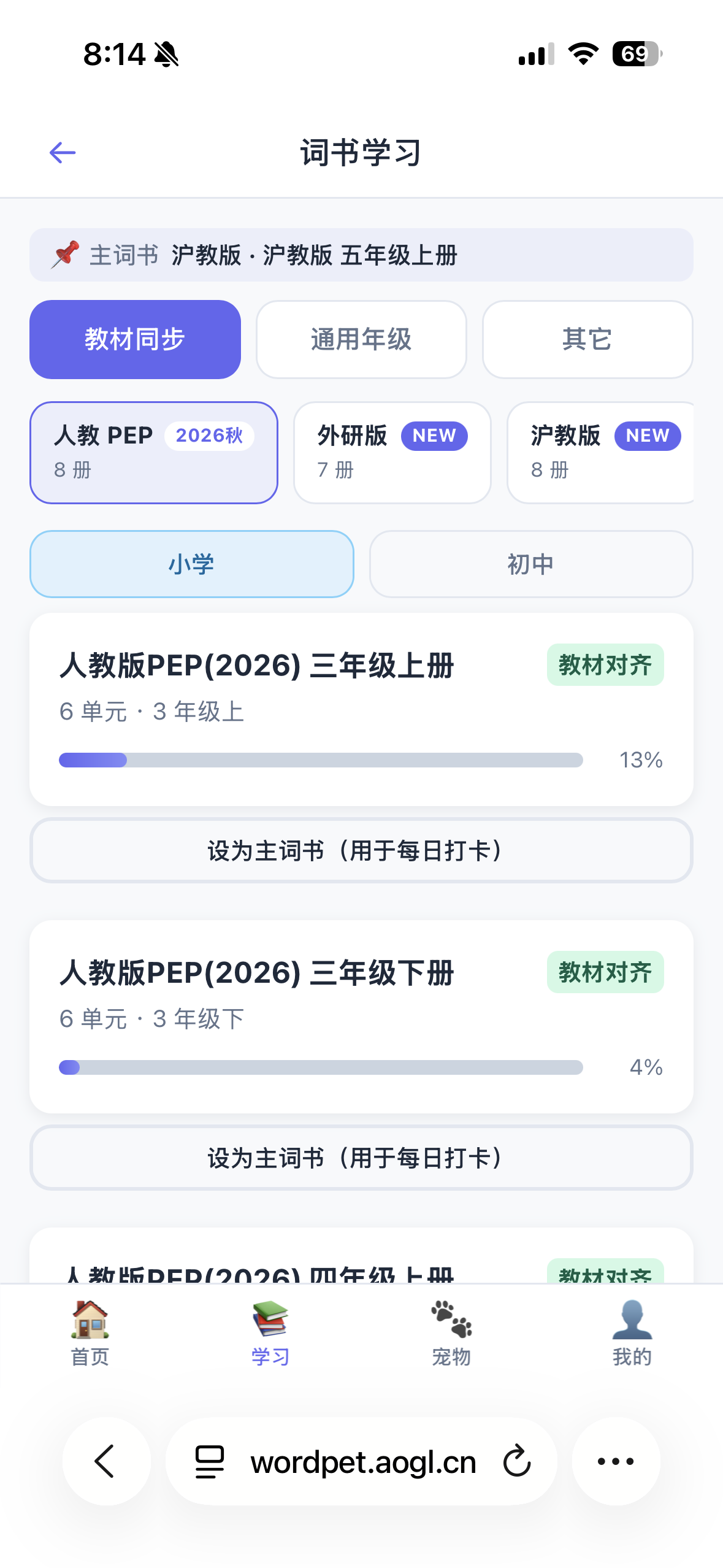
textbook.png — textbook-aligned lists and main-book switch.Pet evolution rules (what XP is allowed to mean)
My Pets shows fielded creatures such as Nezha’s Spirit-Fire egg: stage label, level, gold rank, battle power, EXP bar, flavor line. Evolution anticipation sells better as a cracked egg than as finished standing art—but rules must stay boringly fair:
- Study XP is the spine — Know results and honest corrections feed growth; summon cosmetics must not outpace unit completion.
- Field vs library — owned pets can set to battle; unowned pets point to summon. Stone Ape as brand SSR should not imply paywalls replace check-ins.
- Battle power is a kid scoreboard — real mastery still lives in vocabulary progress bars. Copy must never claim rarity equals English grades.
- Dialogue is practice, not oracle — hold-to-talk bubbles stay short and bilingual-friendly; weak networks and mic denial are expected, not edge cases.
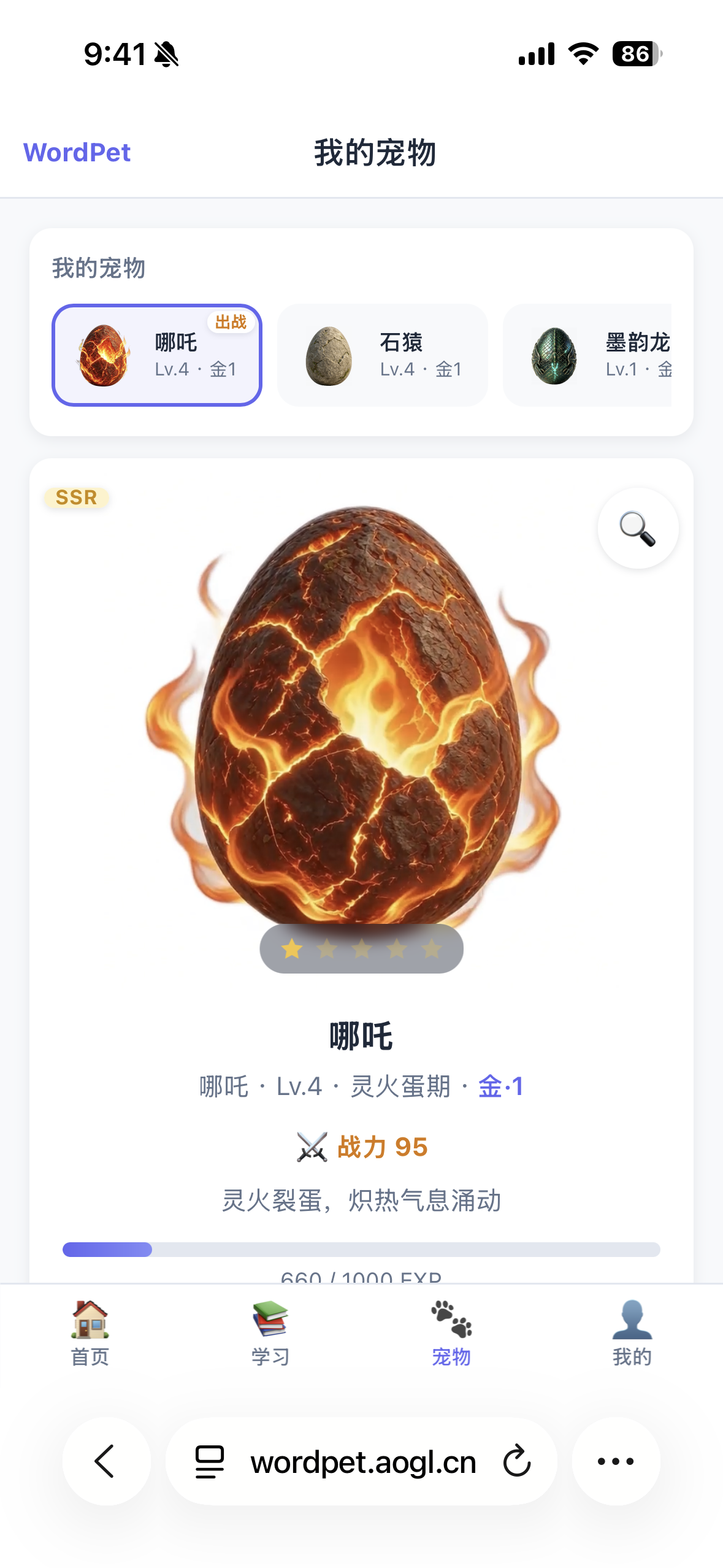
pet.png — evolution stage and battle detail.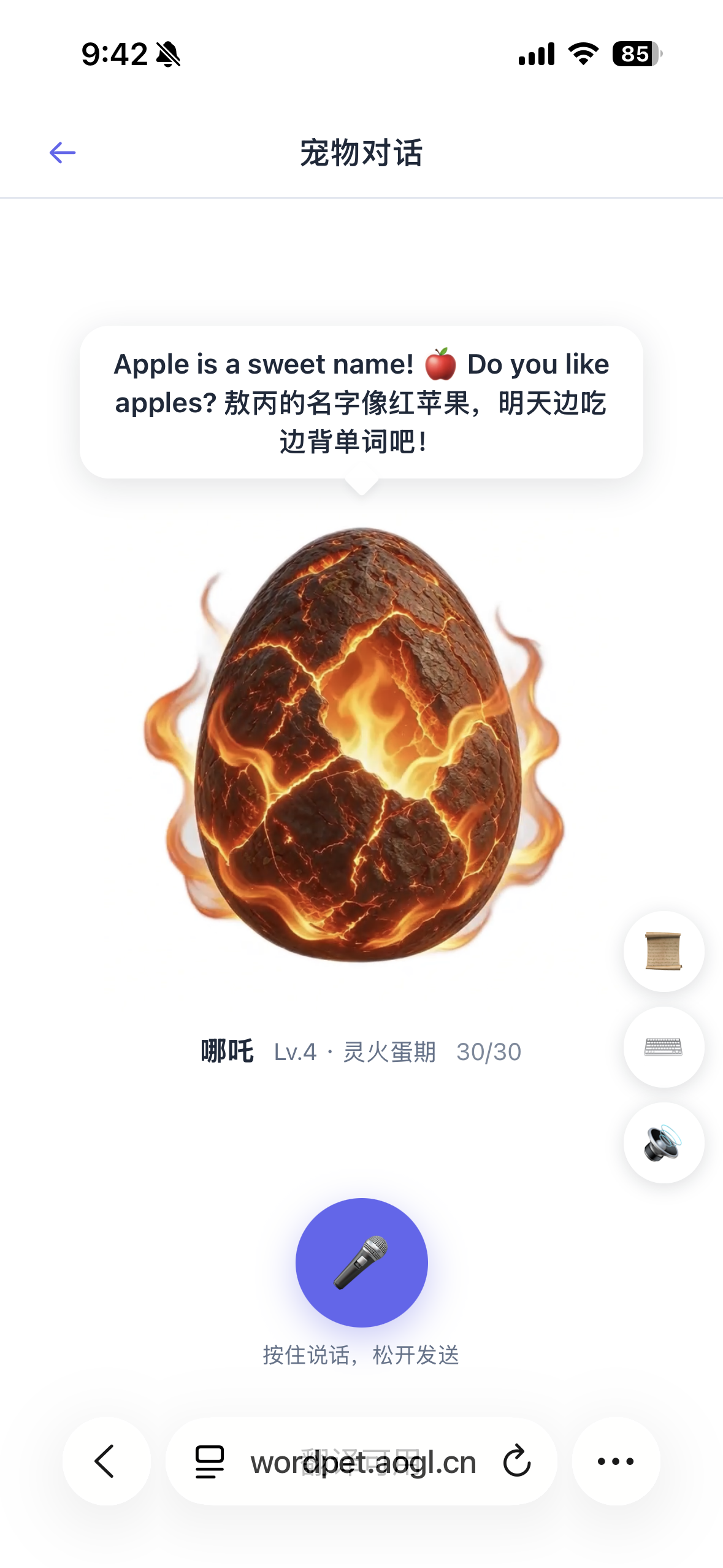
Pet Dialogue.png — soft speaking practice inside the care scene.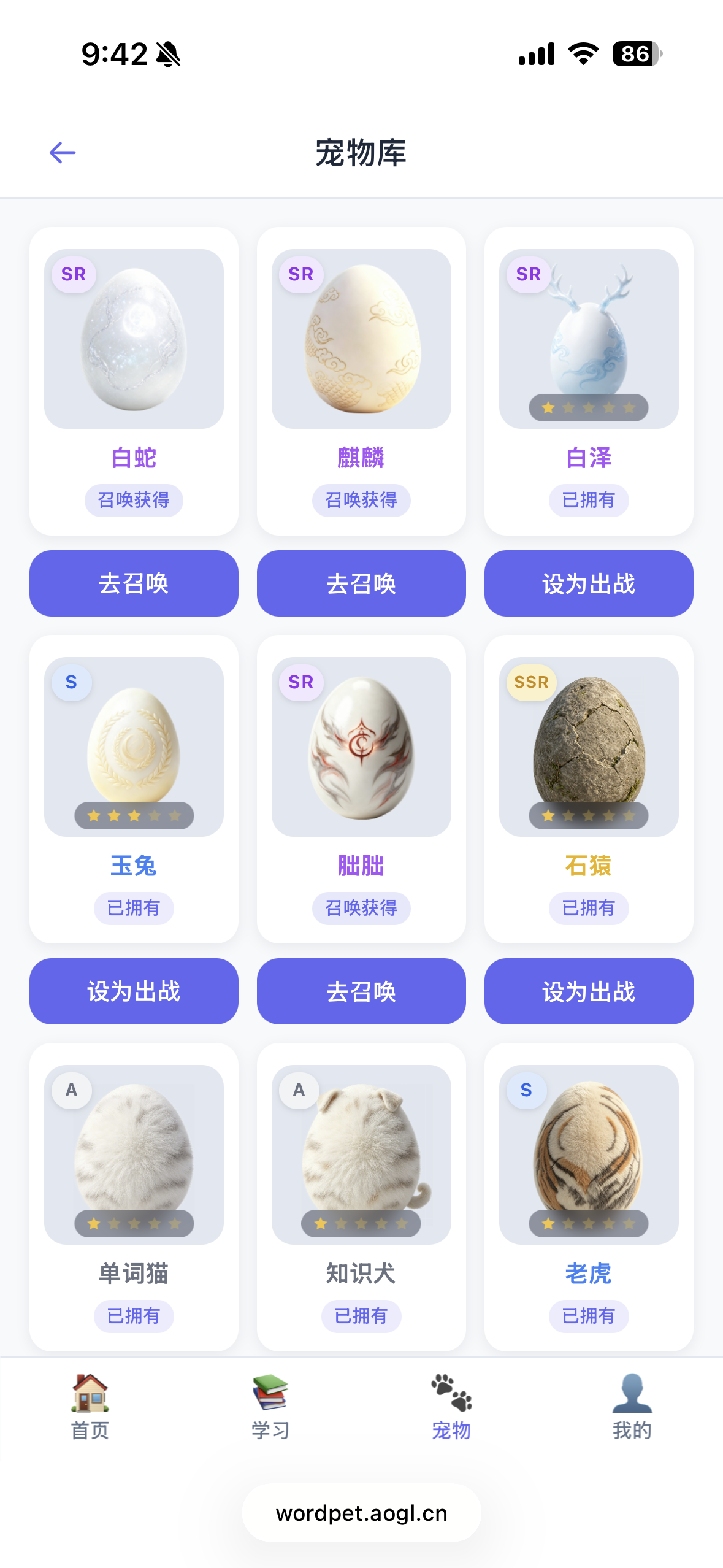
Pet Collection.png — rarity grid; summons stay side-path.Lessons from shipping wordpet.aogl.cn beside aogl.cn
Running the product on a sibling origin keeps auth cookies off the editorial static site. On aogl.cn I archive screenshots with English UI filenames (spaces included) and percent-encode them in markup; heroes still go through cover generation into upload/articles/. AdSense-facing essays need first-person evidence: quote edition strings, show Know/Don’t know, admit what summons must not overwrite. Short locales stay stubs; thick EN/ZH carry review weight—the same pattern as EatToday and Worlds Greatest.
If I rebuild features tomorrow, I would still refuse three automations: auto-pinning a book from school-name guesses without parent confirmation; auto-evolving pets from page views alone; and SEO pills that deep-link Google searches instead of the live app. Habit products die when they optimize for dashboards instead of tomorrow’s ten words.
One more operational detail from the live app: the bottom bar keeps Home / Study / Pets / Me as four equal destinations, but study nights should still bias toward Study first. Home can aggregate tasks; Me can hold account settings; Pets can celebrate; only Study owns the textbook contract. When support questions arrive, I answer with that hierarchy before I talk about rarity grids. It keeps the sequel focused on rhythm and evolution rules instead of drifting back into a generic feature tour.