
This is a personal visual study archived on aogl.cn, sourced entirely from original/role-girl/. The goal was modest: build one recognizable female character line with generative images—lock the outfit and body first, then stress-test expression, lighting, and scene, and finally export a few short clips to see whether she still reads as the same person in motion. It is not a tool tutorial and not a hub maintenance note. If you wanted click-by-click prompts for a specific app, this page will not teach that.
Why I froze a white lace mini dress first
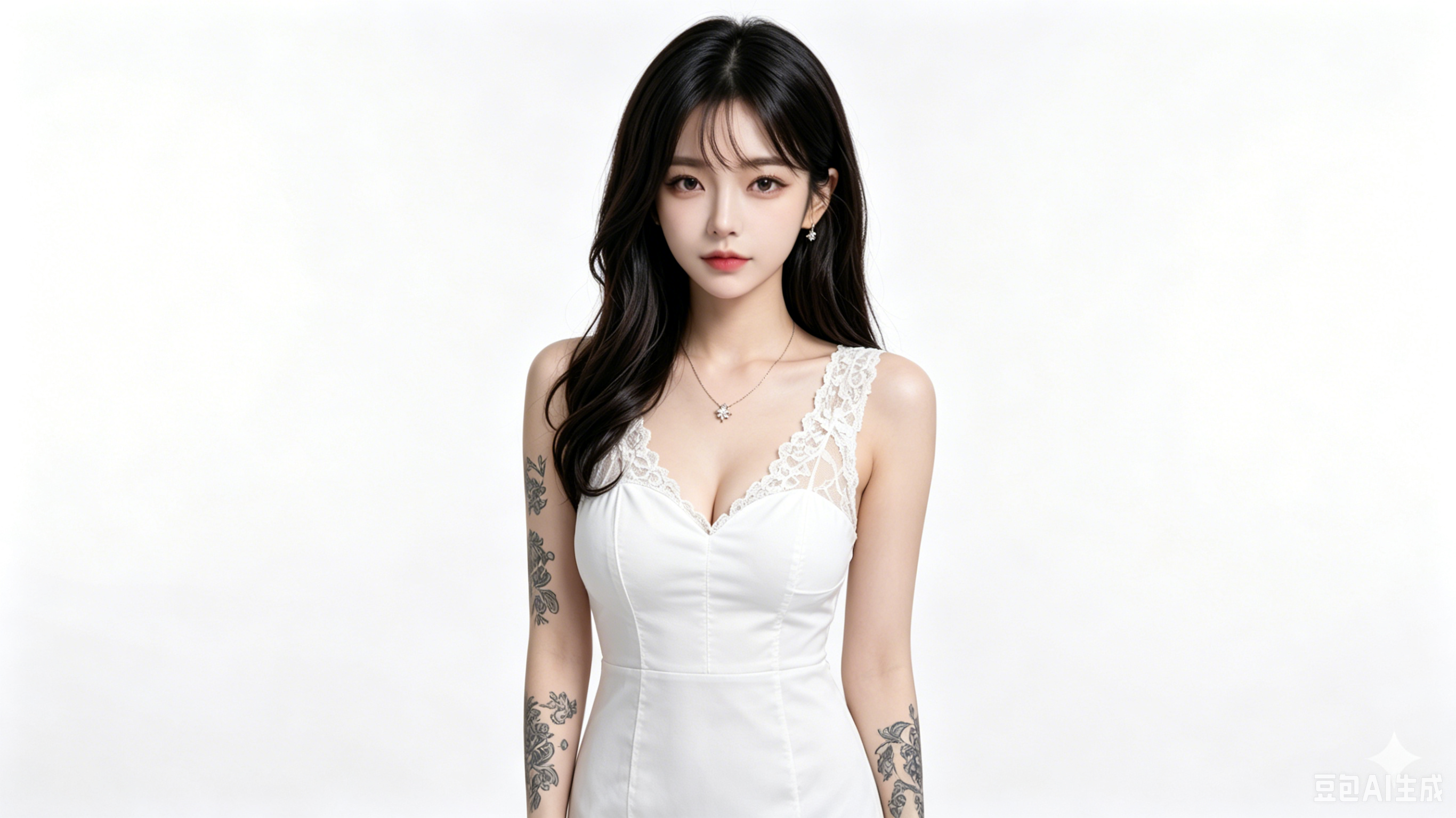
Card-style exercises fall apart when day one is a ballroom gown and day two is a biker jacket—the face can match, but the card does not. I chose a white lace mini dress and slim heeled sandals because the silhouette stays readable from front, side, and back. The composite card.png places profile, front, and back on one seamless white field—a ruler I am not allowed to cheat against. The floral tattoos on both forearms are deliberate identity anchors: if a later portrait drifts the ink placement, I discard the frame instead of painting fixes on top.
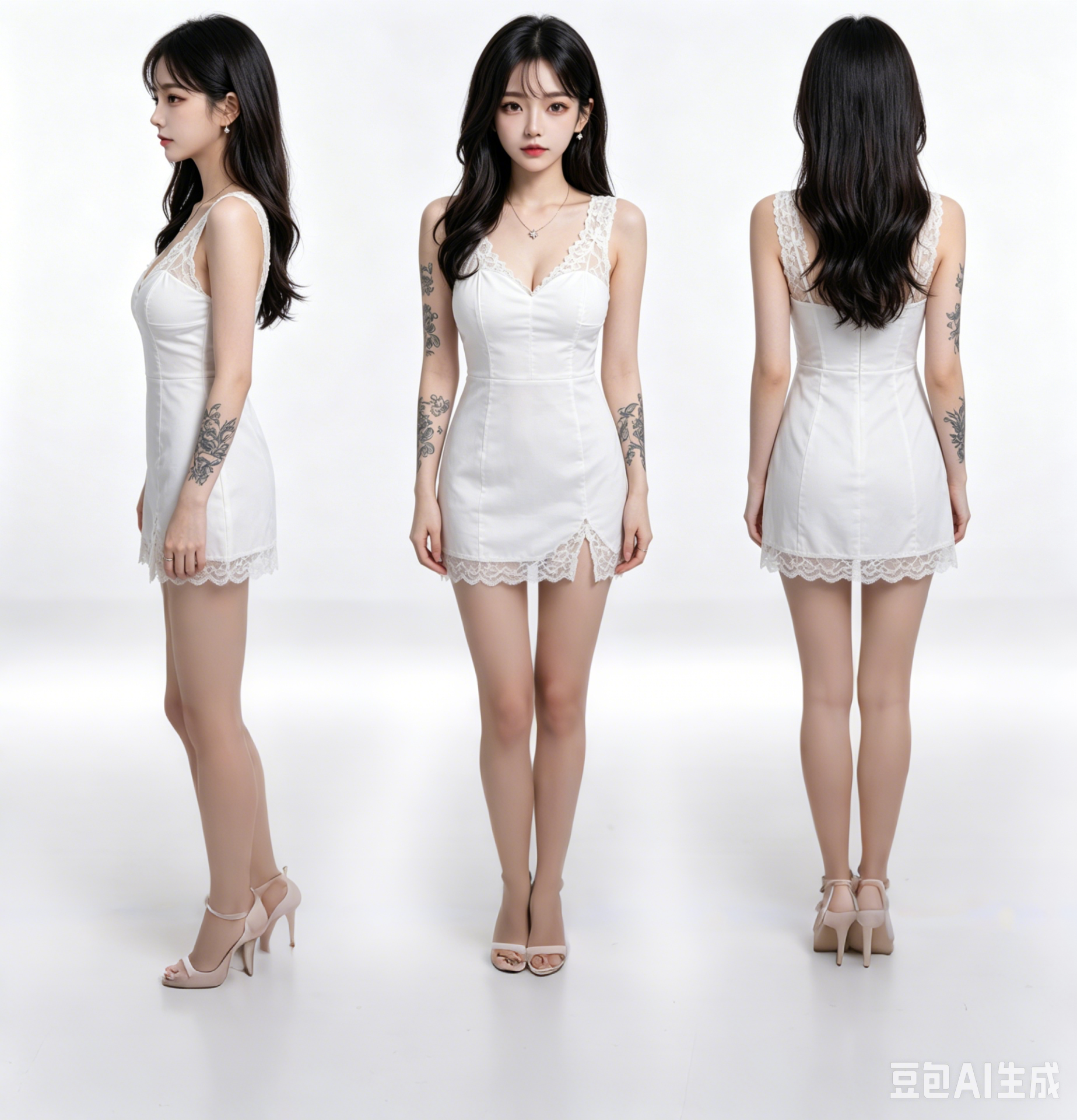
card.png — side / front / back turnaround before final portrait picks.Twelve stills: what changed, not just quantity
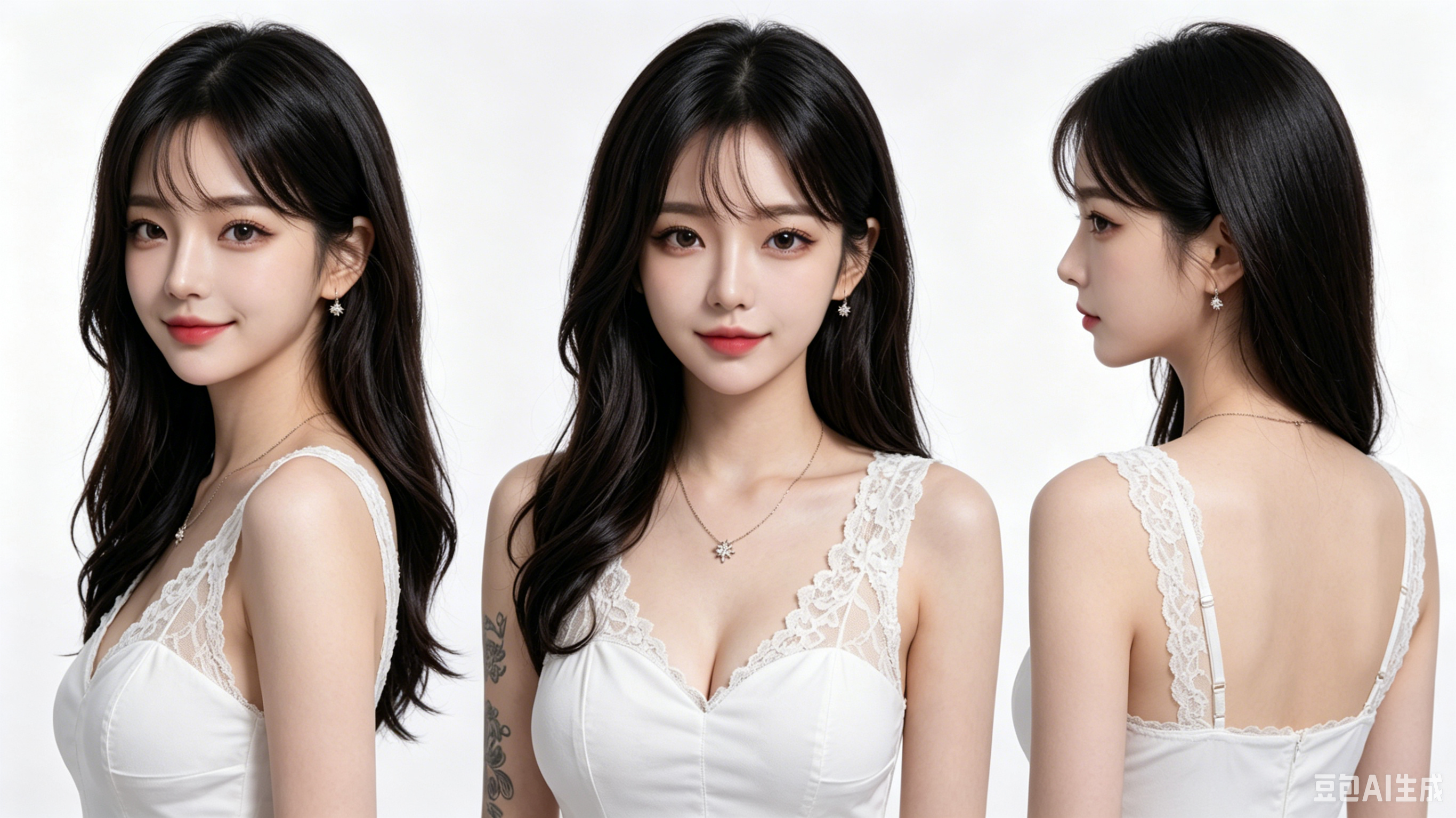
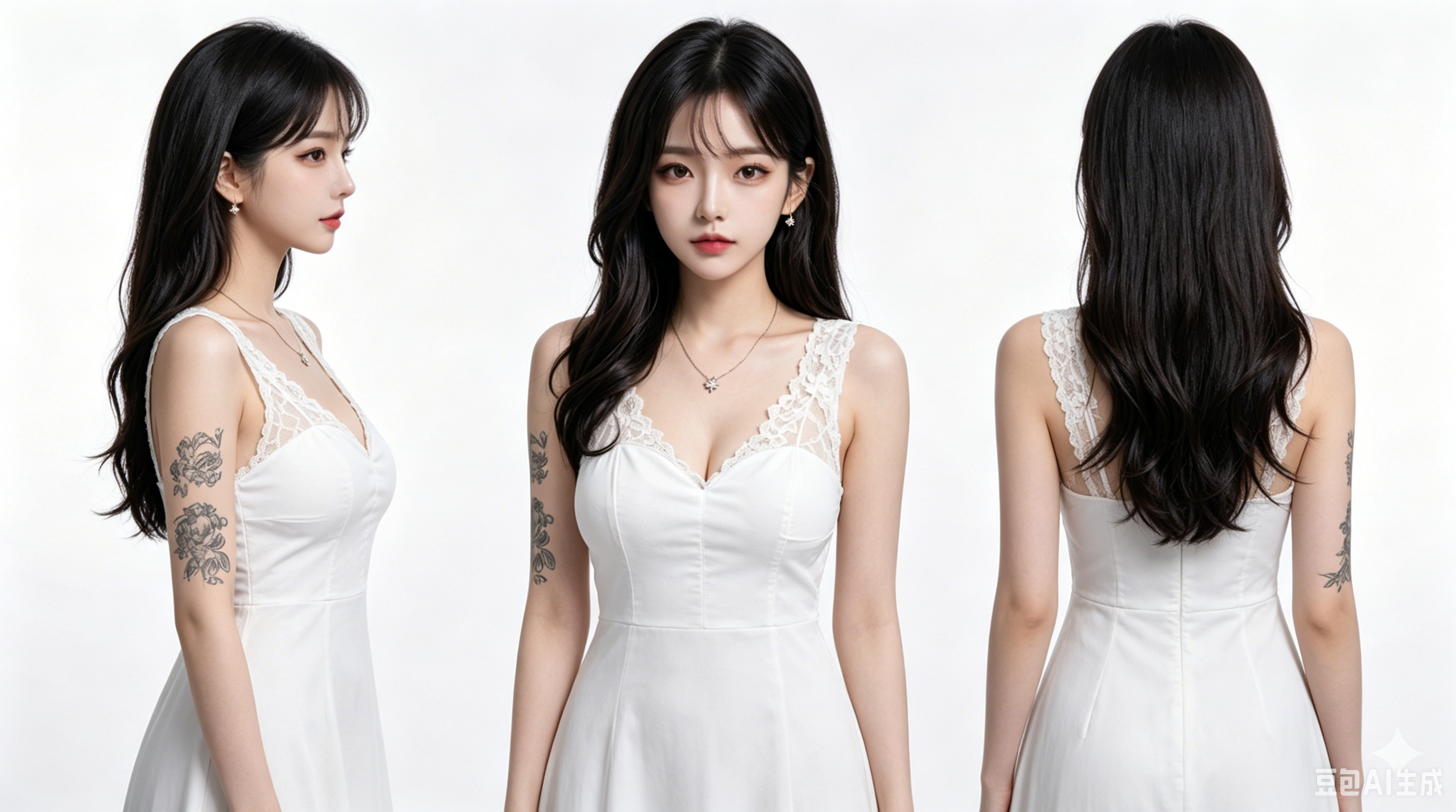
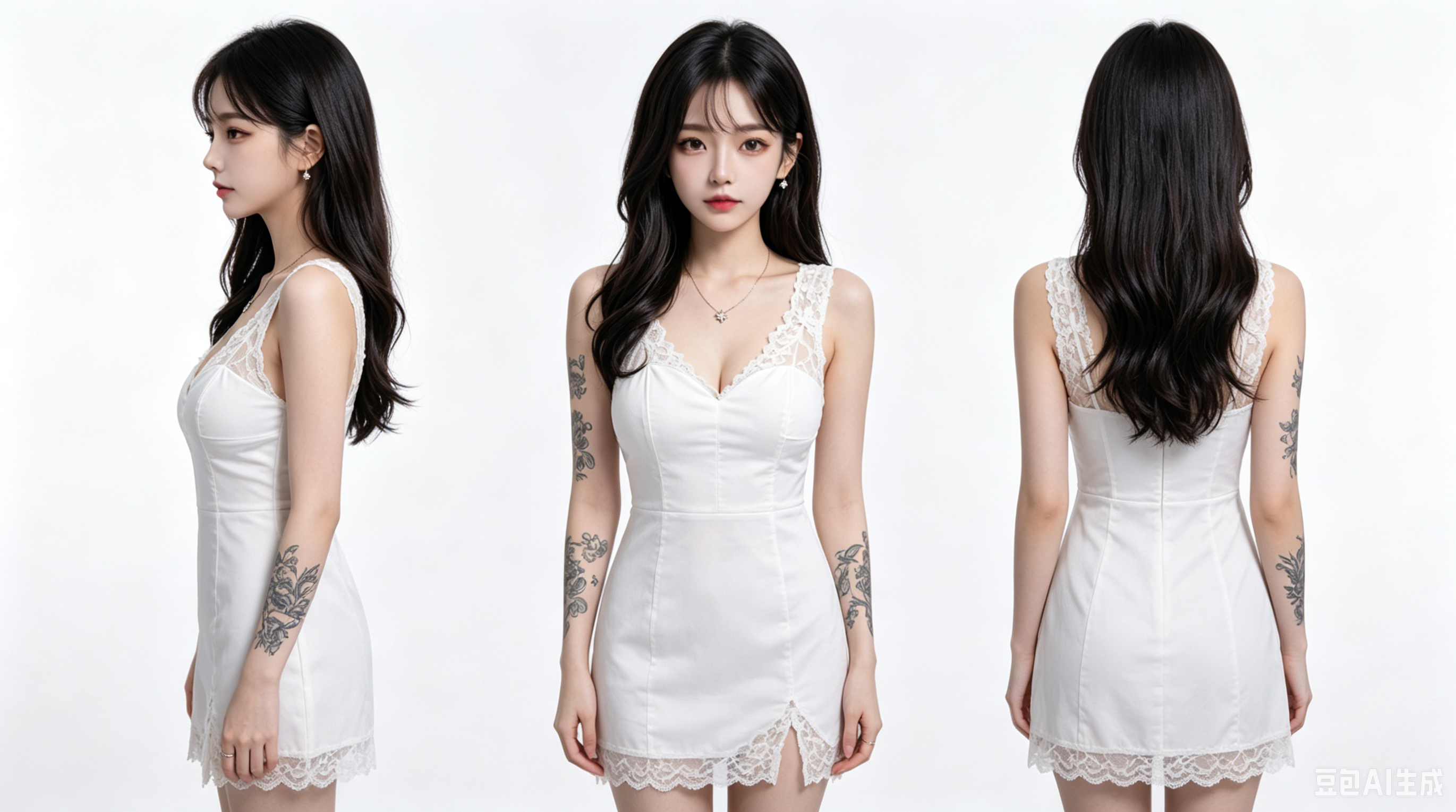
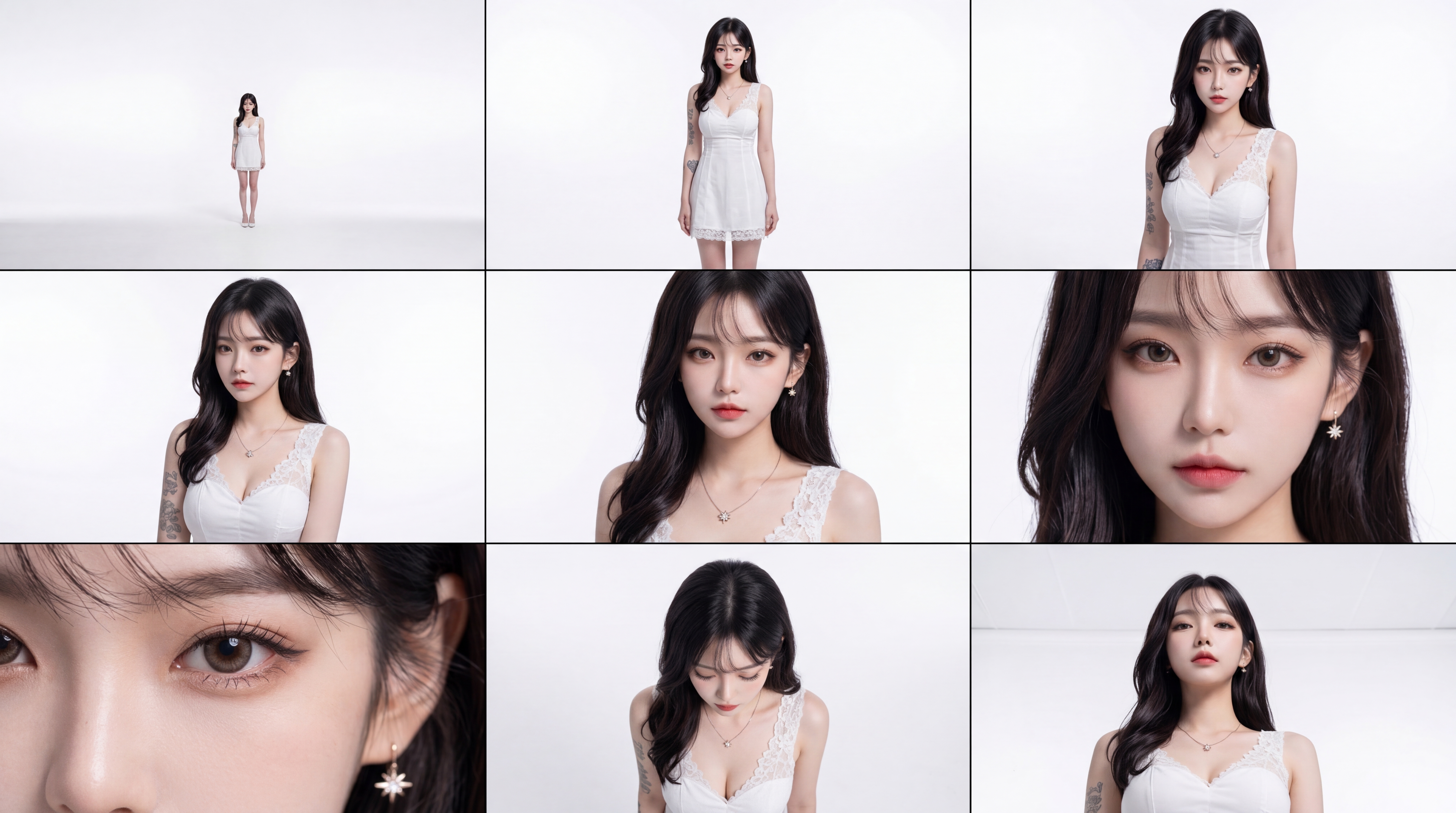
card-1.png through card-12.png (some JPG) are not a dozen random pulls. They group into three passes:
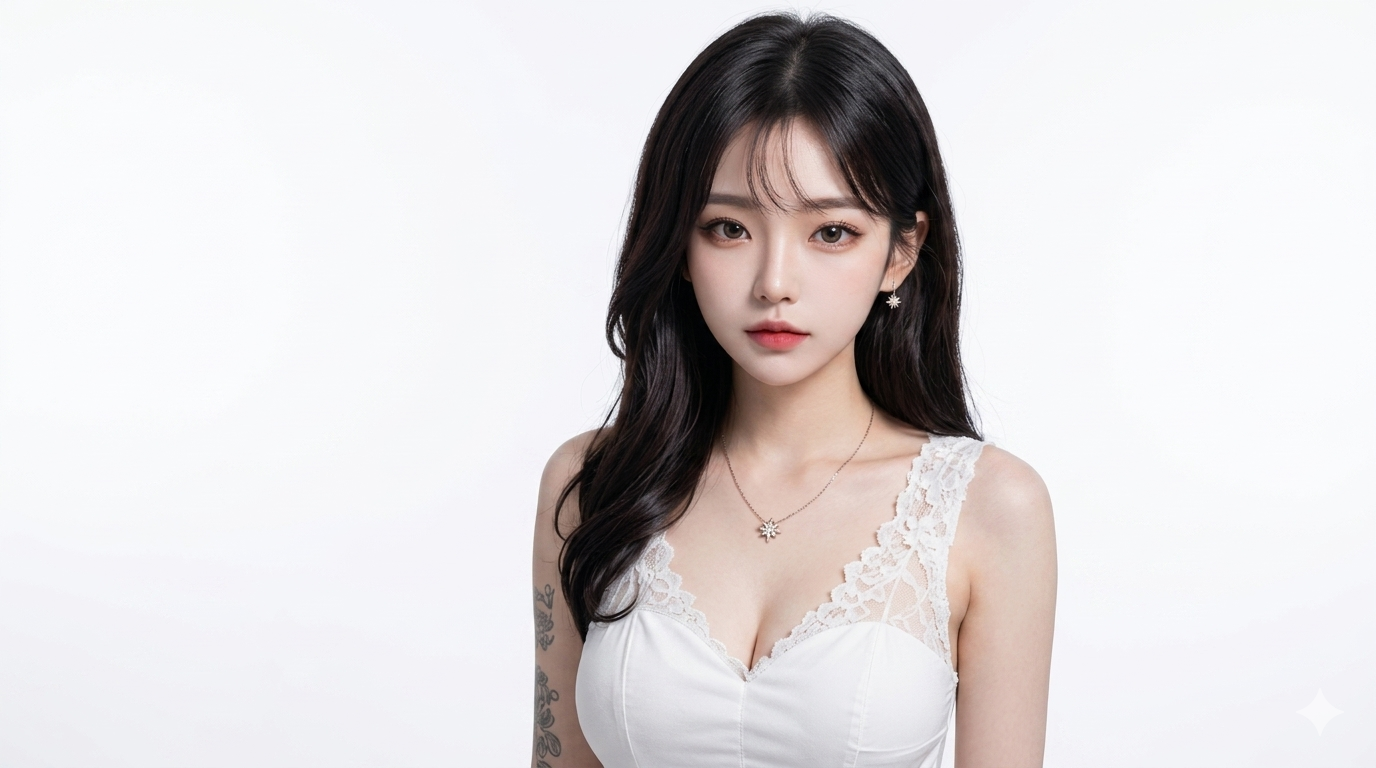
- Face and hair — bangs weight, curl at the ends, eyes straight-on versus slightly averted. Early frames keep makeup softer so every image does not look like a magazine cover.
- Jewelry and neckline — star pendant and earrings must sit on the same visual line; if the lace V-neck depth shifts, the dress reads as a different garment.
- Background and white balance — some frames stay studio-flat white; others warm slightly to see whether thumbnails still recognize the outline.
Six representative frames below show different “keep” reasons; the rest remain in the folder for my own before/after comparisons.
Rainy study: an anchor that is allowed to drift
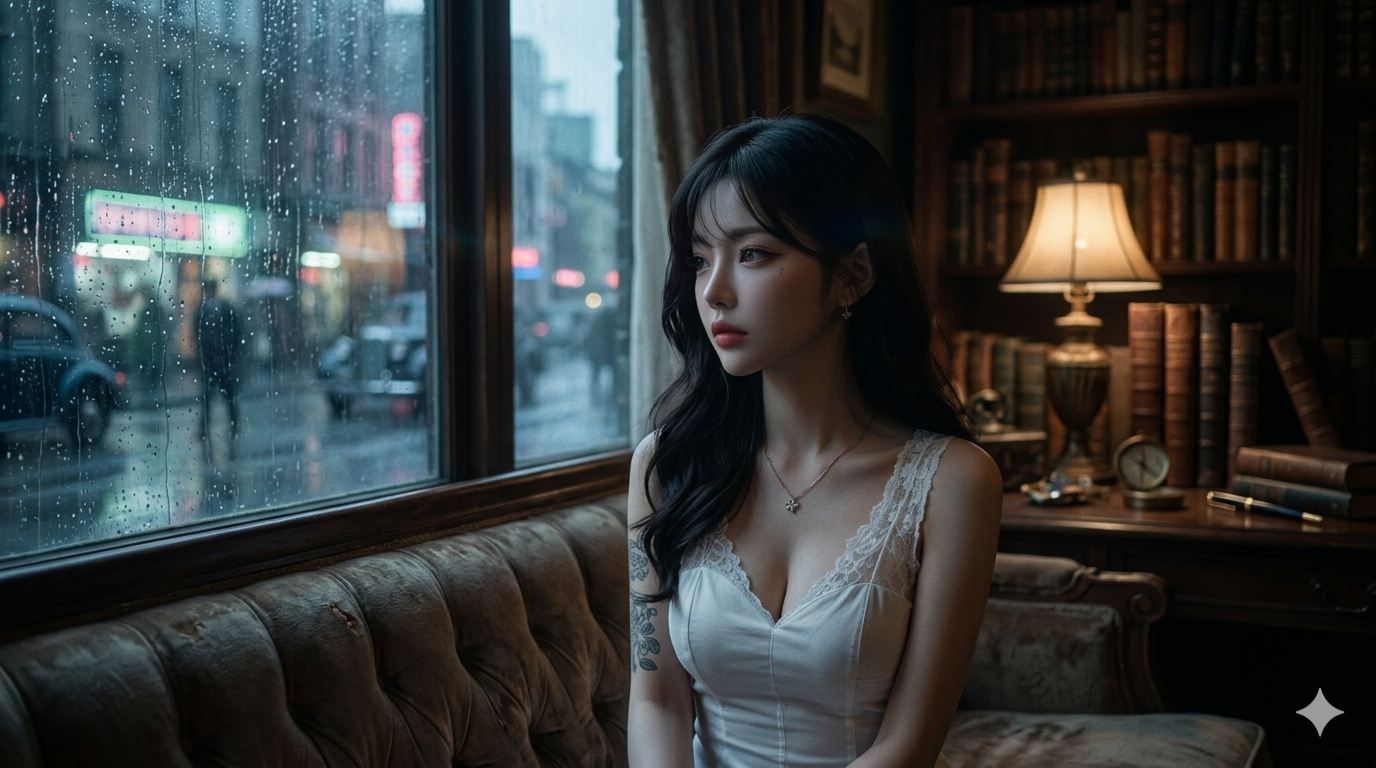
Gemini_Generated_Image_4c1l7v4c1l7v4c1l.png does not share the same lighting as the white-dress turnaround, and I keep it anyway. A character who only exists on seamless white feels like an ID photo; I needed one narrative frame—warm desk lamp, rain on glass, city bokeh—to remember how skin highlights, lace, and tattoo contrast behave when the world is not a cyclorama. That image never replaces the turnaround; it marks an emotional ceiling for future banners or covers.
card.png, not merged into the orthographic sheet.Three MP4s: motion exposes what stills hide
Still frames can look perfect in isolation; short video reveals hair edges, lace shimmer, and whether tattoos move with the arms. card-v1.mp4, card-v2.mp4, and card-v3.mp4 are chronological exports I kept for private review—not marketed as final animation:
- v1 — check whether gait or turns feel like sliding; if so, return to stills and fix pose.
- v2 — tighten hair and shoulders, reduce frame-to-frame flicker.
- v3 — add a little camera life only after identity reads; effects are secondary.
card-v1.mp4 — first motion pass.card-v2.mp4 — flicker reduction round.card-v3.mp4 — third pass, still not a commercial deliverable.What I deliberately did not do
This folder is not a game asset pack: no rig, no sprite sheet, no engine LODs. It is also not client work—no Pantone brief, no print bleed specs. Platform watermarks on some exports are noted as provenance only; I do not document watermark removal or bulk scraping here.
Relation to other character pages on this site
The separate turnaround and walk-cycle archive follows a more animation-pipeline character. This role-girl line is closer to portrait cards plus a mood scene. Both live on aogl.cn in parallel so filenames and intent do not collide.
If you reuse this structure
Fix four pieces: one three-view ruler, numbered exploration stills, a few motion exports for honesty, and one narrative anchor frame—then write a note like this explaining what you kept and why. That reads more like a maintained portfolio than a stack of generic “AI workflow” posts, and it gives visitors (and reviewers) evidence of real craft rather than link aggregation alone.
Rejection log (frames deleted before publish)
I deleted more PNGs than appear in the gallery. Common reasons: tattoo placement drift on the forearms, lace hem length changing more than 5% between front and side views, earrings swapping from stars to circles mid-batch, and heel height jumping between stills. Keeping a mental rejection log matters because generative tools will happily produce twelve “pretty” images that fail the same ruler—documenting deletes proves curation, not spam.
Motion passes rejected early: v0 where hair alpha flickered every frame, and an intermediate v1.5 where the star pendant slid off the sternum during a turn. Only the three MP4s embedded above survived that filter.
Relation to the games hub workflow
I often treat this white-dress line as a Sunday look-dev “close-out” sample: after skimming art-heavy headlines on games.html, I do not always open a new folder—sometimes I only run another bust pass against the card.png ruler. The full RSS → generative → article discipline lives in Games hub RSS × generative art workflow. This page only documents what stayed in original/role-girl/ and why those files earned a stable URL on aogl.cn.